By Sophia Sciulli
:: Sophia discusses modern music streaming and the paradox of accessibility
:: November 6, 2025
:: When I was in elementary school, I owned a cassette deck. Most nights, I sat on my carpet and listened to the popular songs from my childhood. Whether I listened to “Sleigh Ride,” during the month of December or “Fabulous” (from “High School Musical 2”) during the summer time, I was fully engrossed in the music. I knew what to anticipate on the cassette, and sat in my room attentively listening to the tunes. There was something profound and authentic about the way in which I consumed music.
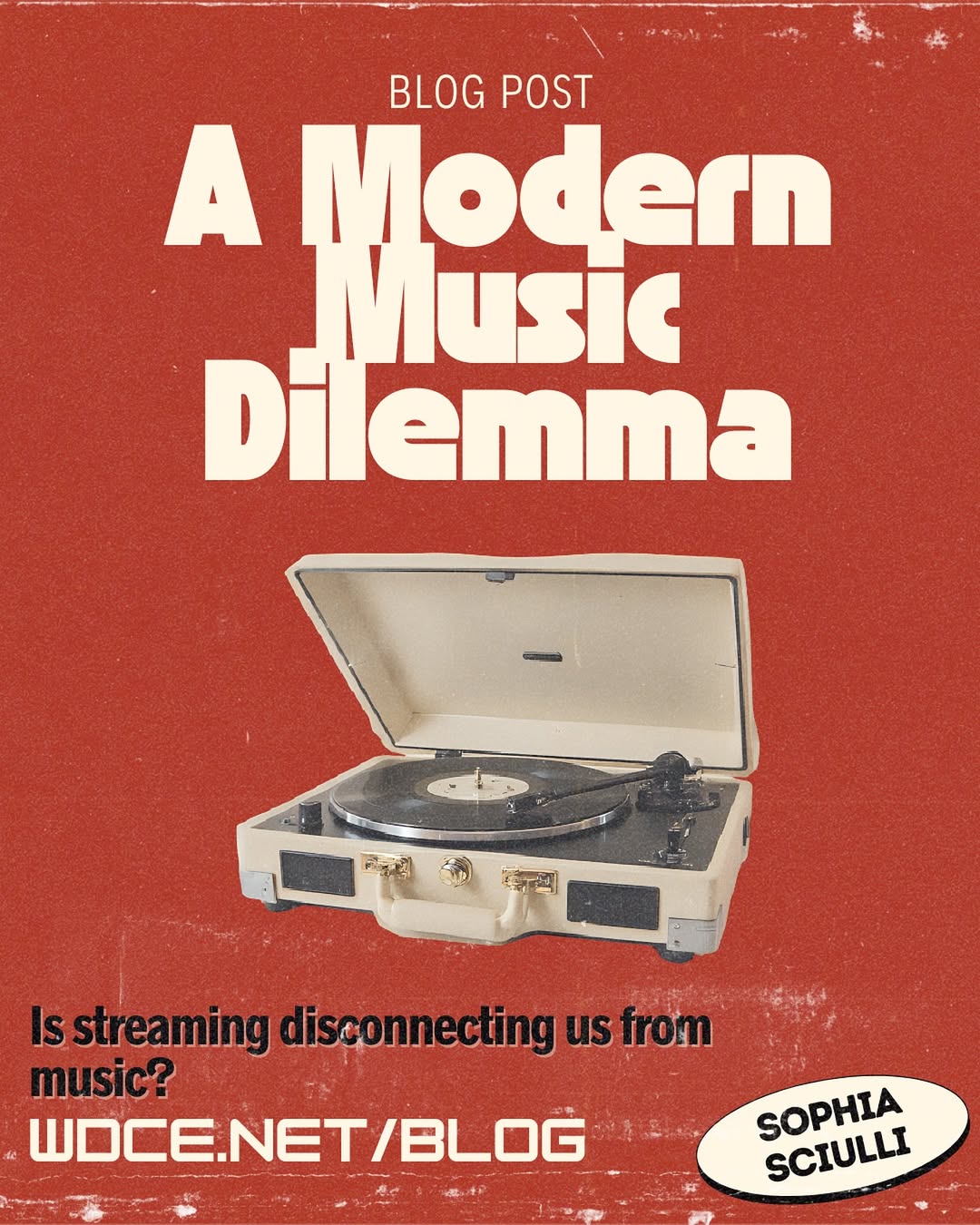
A few decades ago, music used to be a part of everyone’s lives. All ages traveled to the record store and acquired their respective album of interest. No matter one’s music taste or personal style, each person had to put in effort to obtain music. With the exception of pirating music, in the 2000s, people had to physically leave their abodes in order to acquire a CD— or record. Unlike today, one could not play a song at the click of a button.
In our modern era, we are disconnected from the music we consume. Our increasing reliance on technology, accompanied by our shortening attention spans, has led us into a realm of superficial music consumerism. Everything is at the click of a button. The internet can rapidly feed us any song we conjure up, while AI can curate daily playlists that coincide with our perceived mood. Do not get me wrong, I also fall victim to Spotify’s daylists, “Laurel Canyon Wednesday” or “Sad Girl Indie Pop Alone Mix,” as I enjoy looking at what songs may fit that category. However, there is almost a nuanced form of entitlement that music listeners now have. We are greedy. We want our songs to be consistently pleasing to the ear; we cannot dare to hear something that does not completely suit our fancy. Our relationship with music is now conditional and intangible.
At times, I am acutely aware of this. I am not holding the music. So, is the music truly mine? I paid for the monthly Spotify subscription; however, I feel as though my connection to the artists is surface-level. I “follow” artists I like, but do I even know the order of songs within their albums? I know this dilemma does not apply to everyone— and I do not want to entirely discredit streaming platforms.
The closest encounter with my childhood cassette experience was last summer. I was in Maryland, at my grandma’s house, and my mom, grandma, and I were looking through their Beatles records. We placed the Revolver vinyl into the record player, and “Here, There And Everywhere” started to play. I had played music on a record player before, but there was something about the quality of the 1967 album that was distinct. I thought to myself, this is what the experience of listening to music should emulate.
Do not get me wrong, I do not want to entirely discredit music streaming platforms. For the most part, they have made music more accessible and have exposed their consumers to an array of different genres and artists— pushing people out of their comfort zones. With this being said, if you have the ability to venture to the record store, do it. If you have that older sibling, parent, or grandparent with “old-school” music formats, listen to those. Do not isolate yourself in the realm of streaming, because technology is only going to continue to advance. Time is fleeting; do not let records or CDs become obsolete. Our society is already robotic enough.
::

Music Director
Sophia is, as well as an MD for WDCE 90.1 FM, also a free lance private detective, constantly searching for melodic clues and niche groovy rhythms. If you hear something, say something… send your late night musical revelations to wdcemd@gmail.com to give Sophia, and the rest of WDCE’s beat strategists, the leads they need!!


Leave a Reply to averypiantedosicecf5fc198Cancel reply