By Jacob Bennet
:: J Breezy keeps it old school, bringing you the best way to collect and connect
:: October 5, 2026
:: Vinyl is back on the rise! There’s no debating that.
The Recording Industry Association of America’s annual report of U.S. music revenue shows a 400% rise in vinyl sales in the last 10 years. In the last 5 years, there was a 100% rise, making up $1 billion of music revenue in 2025.
Even then, physical music sales made up only 12% of music revenue last year. Streaming services remain the definitive titan of the music industry, making up a massive 82% of all sales. Is anyone surprised? Most of your friends own a subscription to a streaming service, but how many of them own a vinyl or CD collection?
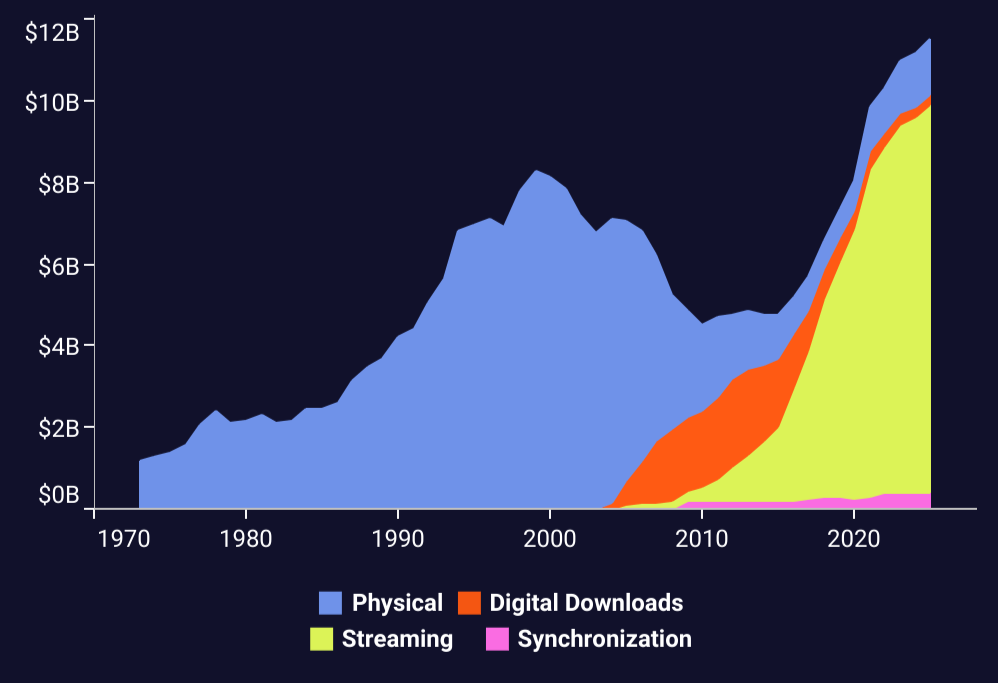
RIAA U.S. Revenue Database: https://www.riaa.com/u-s-sales-database/
Streaming is the NOW and the FUTURE, and for good reason. For the price of one CD, you could pay for a whole month of Spotify or Apple Music, giving you access to nearly every album that’s been formally released. It’s in your best economic interest to ditch the physical and embrace the digital!
So what’s the point of physical music in 2026? No, it’ll never be cheaper than streaming, but you’re more than a money-centric consumer. I’ll outline a few great reasons to consider physical for your personal, human fulfillment. Some things are worth paying for.
Mindfulness
How often have you put on a Spotify playlist while studying, and not been able to name a single song that played during the past hour? It makes sense. Our brains are notoriously bad at multitasking. If you’re trying to finish your math homework, send an email, or read a textbook chapter, you have no choice but to shift your attention to either your music OR your work.
The purpose of music shifts from being an art form to being the background audio of a busy life. Every time I see a classmate with an airpod in while our professor is speaking, I feel a little hurt. Is music becoming another way to merely distract ourselves from the mundane aspects of everyday life?
Bluetooth earbuds and streaming services provide access to a near-infinite catalog of music, playlists that are made using our streaming data and refresh daily, as well as the ability to listen to music anywhere, anytime, and sometimes without our peers being aware of it.
This brings us to our question: How does physical media help us become more mindful of our music consumption and the world around us? The answer is pretty simple. Physical media is difficult to use.
Instead of simply a phone and pair of headphones, you need a CD player, a record player, tape player, and sometimes a speaker system to accompany it. What if you want to listen to music while you’re going for a walk? Great question! Practicing mindfulness also entails being mindful of the world around you, meaning you might be better off listening to the birds or saying hi to your neighbors instead of having your head down and Airpods in. Let’s assume you’re at home or work — an area you know well. Turning on your phone and throwing on a playlist takes ten seconds and very little thought. Alternatively, you could spend a few minutes curating a queue of songs, flipping through a few albums and playlists to hand-pick tracks you’d enjoy.
Either way, you’re doing something anti-mindful: bringing another screen into a life already full of screens and the internet. Every time you want a change of mood, you have no choice but to pick up your phone once again. I don’t know about you, but when I pick up my phone, I get an inescapable urge to look at my text messages and emails, turning a quick playlist change into a five-minute notification-tending session.
Putting on a CD or record eliminates all need for a screen. It grounds us to the reality only influenced by our physical actions and choices. Personally, I’ll look through a stack of CDs I own and choose one that best fits my musical needs at that current moment. This brings me to my next pro-physical note.
Conscious Decisions
Choosing an album is an art form in itself. Unless you burn a mixtape into a disc or tape, whichever album you choose will set the tone for the next 45-ish minutes. There’s something comforting about being restricted to a finite catalog of music that you physically own. The concept of “overchoice” applies to something as low-intensity as picking music. Given the unlimited options of music available through Spotify or Apple Music, we are left overwhelmed by our choices and dissatisfied with our decisions. It may seem like overkill to apply a psychological concept to daily music selection, but considering how much of our lives are permeated by music, every decision adds up.
When I have access to a full Spotify catalog, I usually end up playing the same 400-song playlist. If my cognitive load is already peaking due to heavy coursework and assignments, it’s much simpler to listen to the “easy choice” over scanning through hundreds/thousands of potential albums I enjoy.
Looking at my shelf of 100+ CDs, I have limited options for each mood, but I’m not limited by the number of moods available. For example, I like to listen to slower, quieter artists while I’m writing. This means I have a good 40 choices of indie-folk or indie-rock albums to choose from. Much easier than picking between 40,000. When I’m falling asleep, I like to listen to strictly-instrumental music. For this, I have 35-or-so downtempo post-rock or ambient albums that I can put into my CD player and let lull me asleep. No need for a Bluetooth speaker and Spotify sleep timers.
Regardless of “mood,” having a restricted number of records lets us pay more attention to the music itself. Even if I’ve listened to an album before on Spotify, making the decision to spend $13 on a physical version encourages me to play it more often. Because it’s so expensive, I get satisfaction from playing the same CD tens of times, literally “getting my money’s worth.” I’ve fallen in love with tracks that I’d previously glossed over when streaming, due to the simple matter of me playing the album more often in its physical version.
I’m not rolling in cash. Buying CDs is an infrequent luxury to me that I equate to: “it’s the same price as three cups of coffee.” Because of this significant cost over streaming subscriptions, choosing which album to buy is a whole other type of conscious decision. In my eyes, purchasing music and having it in my physical possession is an indicator to myself and to the musician that their art is worth paying for. This brings me to my third point.
Artistry and Compensation
Artists pulling their music from streaming services is not a recent phenomenon. The birth of Spotify and Apple Music catalyzed a massive shift in the economics of music sales. All of the sudden, the money which was once directed towards a record store, label, and musician is now directed towards a massive corporation, who assumes full control over the distribution of funds.
The industry giants, such as Spotify, Apple Music, and Amazon Music have adopted the pro-rata model of artist payout, pooling together monthly subscription income and distributing it based on each artist’s percentage of total streams from that month. This means that the pop superstars of the current moment will receive vastly more money than a well-respected artist of smaller following. Why is this an issue? Shouldn’t popular artists be making more money? How is this any different than The Beatles selling more vinyl records than a local band? Trust me, it’s a lot different. And it’s an inherently streaming-service-related injustice.
Imagine you obsessively listen to a rather unknown indie artist. You have never before streamed an artist who has charted in the Top 200. This doesn’t matter. The money you pay to Spotify each month funnels into those Top 200 artists, just as much as any other Spotify subscriber. You aren’t “paying-per-stream” to your favorite artist. You contribute to a pool of money, handed out to musicians you don’t even know.
It’s a topic for another time, but it’s worth mentioning that these pro-rata models are a major cause towards “quantity over quality” album trends. If you’ve noticed a recent trend in 20-track albums, multiple “deluxe” albums, releasing two or more albums in the same year, it’s all a game of numbers. More music means more streams, which means greater percent-share in streaming revenue. Something to consider while listening to The Life of a Showgirl: The Encore.
Physical media bypasses many of these compensation issues. The website Bandcamp has become one of my go-to sources of physical media. They proudly display on their “Fair Trade Music Policy” page, that Bandcamp only takes a 10% cut of physical media sales. This means that buying a $20 record would pay $18 to the artist or record label. For perspective, brick-and-mortar record stores take around a 30% cut from music sales.
I frequently buy from local stores, including Richmond/Charlottesville’s own Plan 9. If that 30% cut is going towards a local business, then I’m happy with the slightly-reduced artist cut. Since many of the bands and musicians that I enjoy are smaller and oftentimes not on streaming sites, I feel satisfied by owning the CD of an album I love, and knowing the artist that made it is being compensated for their talent.
In a world dominated by the capitalistic reframing of artistic practice, the truly talented get drowned out by statistics. The economy that stacks wealth on the privileged will make the working class go hungry. The music industry is no exception. Oftentimes, the $25 you spend on a record is needed by the artist just as much as you need it.
Final Thoughts
To me, physical music will always have a value. It’s becoming more and more common to see artists pulling their music from Spotify, opting for physical releases or purchasable digital albums. Often it’s in protest of low compensation, or over the hundreds of millions of dollars that Spotify CEO, Daniel Ek has invested into an AI military drone startup. This means that regardless of mindfulness practice or artist solidarity, some of my favorite albums are ONLY accessible through physical media.
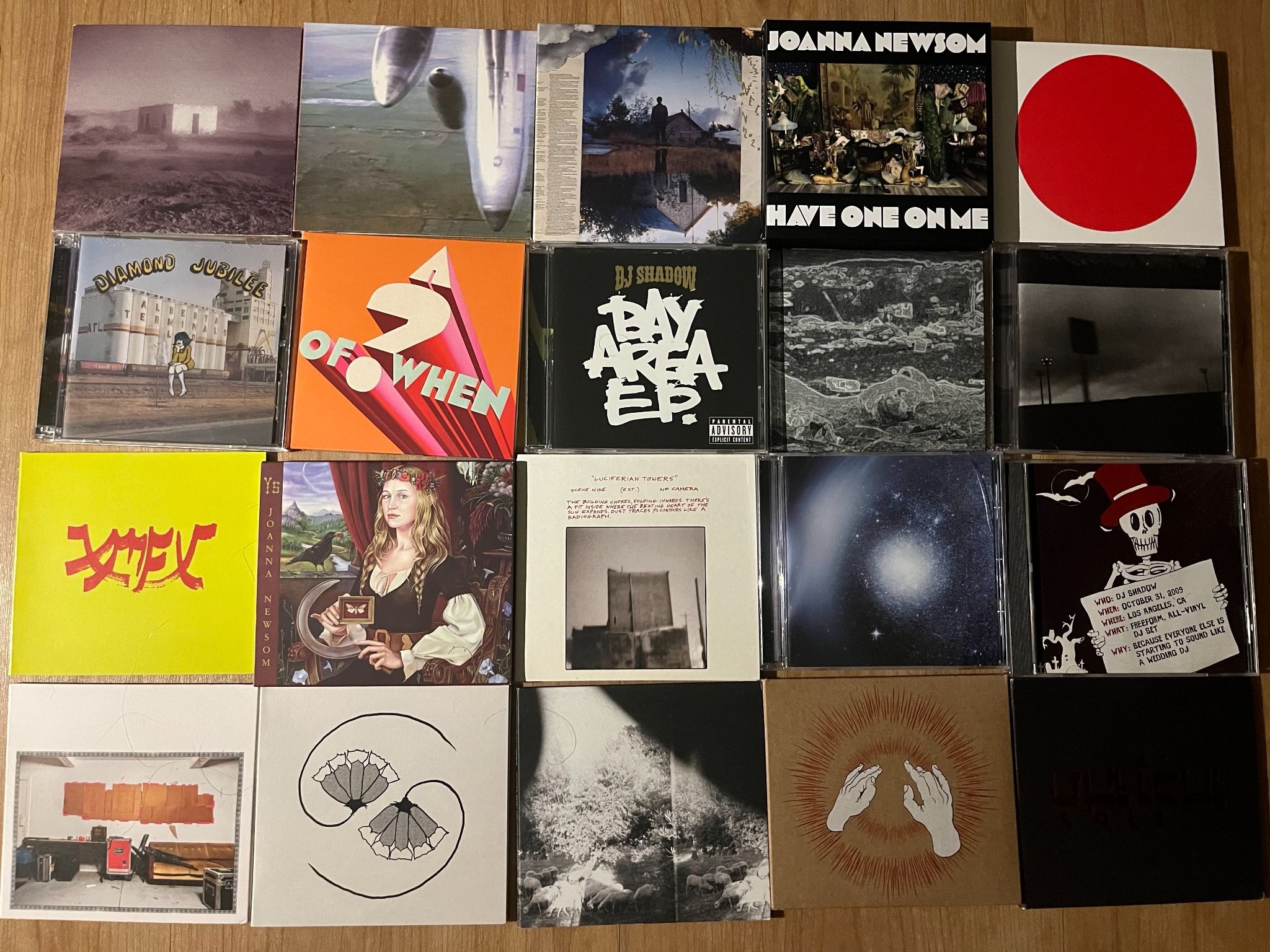
Some of my albums that aren’t available on Spotify:
As our lives become increasingly digitized, paperback books, vinyl records, film photography, and all other physical mediums have revealed their utility. The youngest generations, growing up surrounded by screens, are fascinated by the tactile and mechanical nature of analog media. It’s a change in preference that I’m very excited to see.
::

Music Director
Jacob knows his way around a four-wheeler… and a Music Monday. Jacob found and tamed his first ATV in the wild western pastures of Kansas. This guy can handle a live machine, so it’s safe to say he knows a good rap album when he hears one. Ride on, Jacob!
Do YOU want to write a blog? Yes, YOU!! If you HEAR something… WRITE something! Send submissions to wdcemd@gmail.com !!

Leave a Reply