By WDCE Music Directors
:: April 26, 2026
:: TV Star — Music For Heads
Genre: Alt. Rock
Release: Album
Recommended Tracks: “The Package,” “Reality Cheque,” “Lodestar”
TV Star’s debut album is a blend of psychedelia, alt. country rock and shoegaze — a little something for everyone. The Seattle five-piece feels like a long-awaited, born-from-Americana response to the Stone Roses. TV Star pulled from the musical sounds of the past half century to produce a record that feels like not just a response to the state of rock, but something that wants to evolve it. That being said, such strong holds to classic influences combined with such ambition can lead to a bit of that ever-common first album spunk. When grabbing onto so much of the past, TV Star forgot to grab onto something to set them apart. There’s stuff to enjoy but it can get muddled down into genericness.
— Jonathan Sackett
Atsuko Chiba — Atsuko Chiba
Genre: Alt. Post-Rock
Release: Album
Recommended Tracks: “Torn,” “Retention”
Monreal’s Atsuko Chiba gets post-real on their self-titled fourth album. Atsuko Chiba is a winding journey through a distant soundscape, a restrained and subtle outing that encourages careful listening. Each moment is thoughtful and intricate, creating a solid blend of post-rock solace with progressive rock’s urgency. Atsuko Chiba walks a fine line. After more bombastic, forward tracks, like last year’s “Pope’s Cocaine,” the five-piece has toned down their punkier side. Instead, they delve into their psychedelic tendencies to create a trip-heavy and ambient counter.
— Jonathan Sackett
Beatrix — We Swallowed The Sky
Genre: Chamber-Pop
Release: Album
Recommended Tracks: “We Swallowed The Sky,” “Hole To China,” “Turn You Down”
This new Beatrix album is a great entry into the ever growing chamber-pop, folky, singer-songwriter musical catalog, drawing from a lot of influences throughout each and every track. The opening sequences on “Class Reunion” pull straight from Phoebe Bridgers’ early work, but not copying it. Beatix leans more into the pop side of her indie-folk sound, implementing a larger number of instruments, and focuses more on upbeat or uplifting progressions. If Boygenius and Phoebe Bridgers is for sad young adults, We Swallowed The Sky is for their mature recovery. That being said, Beatrix knows well what genre she is appealing to. Much of folk and singer-songwriter music is vocals-focused, usually only having an acoustic guitar or light pianos in the background complementing their voice. The song, “My Angel” is a good example of this, where you pay more attention to the beauty of her lyrics when the instrumentation is stripped back (until the electric guitar riffs at the end lol). For the rest of the We Swallowed The Sky, Beatrix weighs her vocals equally against the much more elaborate, and poppy production. In the title track — one of my favorites on the album — the first sound you hear is electric guitar feedback, before crashing into a complex and ominous blend of electric strings and pianos. The production then retreats away to allow her to begin her first verse. This structuring, plus the “A Day In The Life,” Beatles-style, eerie, multi-instrument riser towards the end of the track, makes this song my favorite on the album.
— Jacob Bennett
Angelo De Augustine — Angel in Plainclothes
Genre: Indie-Folk
Release: Album
Recommended Tracks: “Empty Shell,” “Pet Cemetery,” “The Cure,” “Mirror Mirror,”
Angelo De Augustine is just Sufjan Stevens if he started making music in the 2010s and was raised on the west coast. It’s not just that the two artists sound exactly alike, they are closely related in many other ways. Augustine is a partner of the record label that Sufjan Stevens founded back in 1999, AND the two collaborated on an entire album in 2021, called A Beginner’s Mind. Angelo carries the same style of soft-spoken, near whispering tones in his vocals, more often than not, in an uplifting way. Most of this album, but “Mirror Mirror” especially, sounds like it was sung with a smile, using a similar lighthearted and optimistic tone as Nick Drake used on Pink Moon. The first two tracks on Angel in Plainclothes, “Empty Shell” and “Pet Cemetery” have a very different atmosphere than those directly after them. These songs are ominous and dark sounding, with the first line of the album literally being, “Where do you run when your life’s on the line?” I’m glad this theme doesn’t carry throughout the entire record, but I’m glad it’s around nonetheless, adding better depth to an otherwise monotone folk album.
— Jacob Bennett
Noah Kahan — The Great Divide: The Last Of The Bugs
Genre: Indie Folk Pop
Release: Album
Recommended Tracks: “End of August,” “Doors,” “The Great Divide,” “Porch Light”
From all the way back in 2018, when I bought “Hurt Somebody” off iTunes from a relatively niche artist, to now—watching him approach 30 million listeners—it’s been surreal to witness the rise. On The Great Divide, that evolution shows up in both the production and the writing. With Aaron Dessner involved, songs like “End of August” and “Lighthouse” build slowly with layered instrumentation—soft piano and synths, swelling guitars, and ambient textures—while others like “Headed North” stay stripped back and intimate, almost like voice memos. Standouts like “American Cars” and “Porch Light” hit especially hard—deeply detailed, emotionally specific, and shifting between perspectives of distance, family, and memory—while “Haircut” unravels in sharp, self-directed critique, and “Dashboard” into “23” traces a clear arc from frustration to reluctant acceptance. I wouldn’t say these songs lean on the same instantly sticky choruses as Stick Season, but that restraint works in its favor, letting the emotion sit longer and cut deeper. That said, hooks on “Paid Time Off,” “Downfall,” and especially “The Great Divide” still land with real force. Recurring motifs—driving, leaving, home—run through everything, quietly defining his world. I still hear echoes of earlier work in certain melodies and lines, but they feel more distant now, more reflective. The result is an album that feels more mature yet strangely more nostalgic—grounded in a raw, unfiltered authenticity. Shaped by fame and change, it comes across as heavier, more cohesive, and more emotionally complex, like he’s become fully aware of the life he’s stepped into and is no longer trying to outrun it.
— Piper Turri
Gia Margaret — Singing
Genre: Ambient Indie Folk
Release: Album
Recommended Tracks: “Everyone Around Me Dancing,” “Alive Inside,” “Moon Not Mine,” “Good Friend”
On Singing, Gia Margaret returns to vocal songwriting after years of ambient and instrumental work, a shift shaped by a period where a vocal injury temporarily forced her away from singing. That history shows up in the record’s structure: built from layers, repetition, and small sonic details rather than linear song development. Her voice is close-mic’d and often blended into the mix, so it sits within the instrumentation instead of sitting above it. “Everyone Around Me Is Dancing” uses fractured piano, IDM-style rhythmic accents, and short brass hits that cut through the texture. “Alive Inside” is more minimal, centered on harp, sustained tones, and a vocal line that appears and recedes rather than staying fixed. “Good Friend” brings together tabla percussion, turntable scratches, and Gregorian chant in a deliberately uneven mix of elements. “Moon Not Mine” stays loose and lightly structured, while “Rotten” cycles vocal fragments over a steady harmonic loop before closing with a spoken-word Italian language sample. Across the album, lyrics come in fragments and repetitions, while the production focuses on texture, space, and subtle variation over traditional build or payoff. The result is a record that translates ambient methods into song form, but still favors fragmentary construction over conventional structure.
— Piper Turri
Eaves Wilder – Little Miss Sunshine
Genre: Indie Pop
Release: Album
Recommended Tracks: “Hurricane Girl,” “English Tea,” “Summer Rolls”
Little Miss Sunshine opens an audience to an introspective look into Eaves Wilder’s mind’s eye. The enthralling cadence of the UK artist’s voice is beyond melodic, as tracks progress from an ethereal song that would be part of the score in “The Virgin Suicides” into a medley of the opening credits for a late 90s-early 2000s off-beat—and semi-intense—teen film. Each track, embodying a specific aspect of heartbreak, restlessness, and desire for change creates for a hypnotic listen.
— Sophia Sciulli
Miss Grit – Under My Umbrella
Genre: Synth-Pop
Release: Album
Recommended Tracks: “Won’t Count On You,” “Where is My Head,” “Overflow,”
While listening to this album, “Cats in the Cradle” by Harry Chapin was playing in the background (at the radio station). Definitely a contrast between the 70s soft rock and the twenty-first century techno-pop, reaffirmed my appreciation for slower tunes. While I can see the appeal in clubbing or maybe running to Miss Grit’s new album, the tracks were overall quite stressful to listen to in a casual setting. Additionally, while the album artistry is nowhere near the most important component of one’s listening experience, their cover was quite unsettling to look at as I was reminded of the girl from the movie “The Ring.” There were a few songs worth listening to if one was tripping on acid at the stroke of midnight in Jersey City. While an oddly specific description, that is exactly on Under My Umbrella makes me feel. I probably sound like a broken record, and a seventy-year-old, but what can I say I have never been a fan of the music that makes me feel like a depressed computer system.
— Sophia Sciulli
::
Music Directors
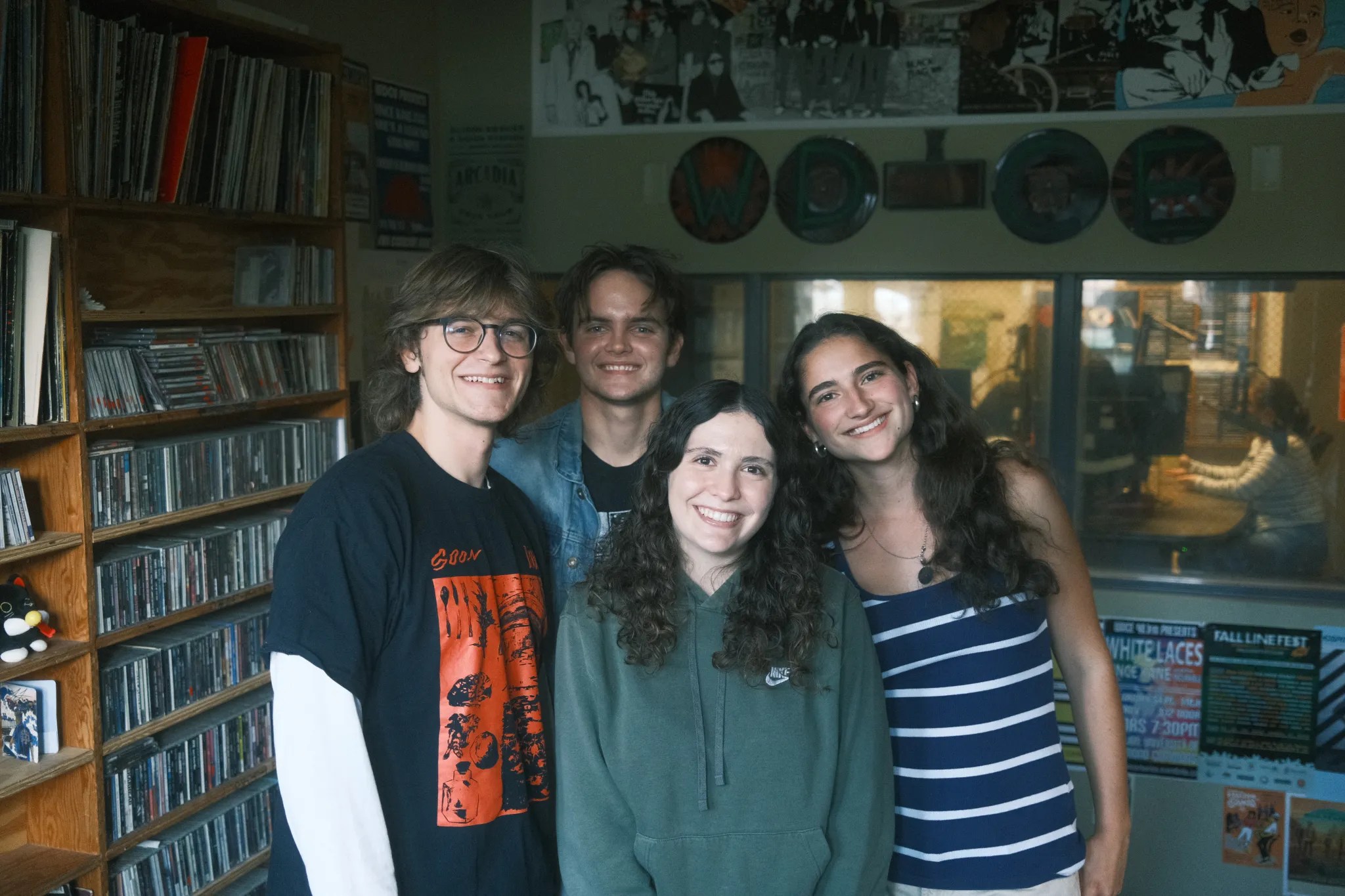
The Music Directors here at WDCE are an elite strike force, one that is perpetually locked onto the pulse of global music and sound. What’s hip? What’s groovy? What do you need to know to sound indie, alt, and well-informed? Well our MDs have you covered.
Consider reaching out… what could you write about?
Send submissions to wdcemd@gmail.com !!

Leave a Reply